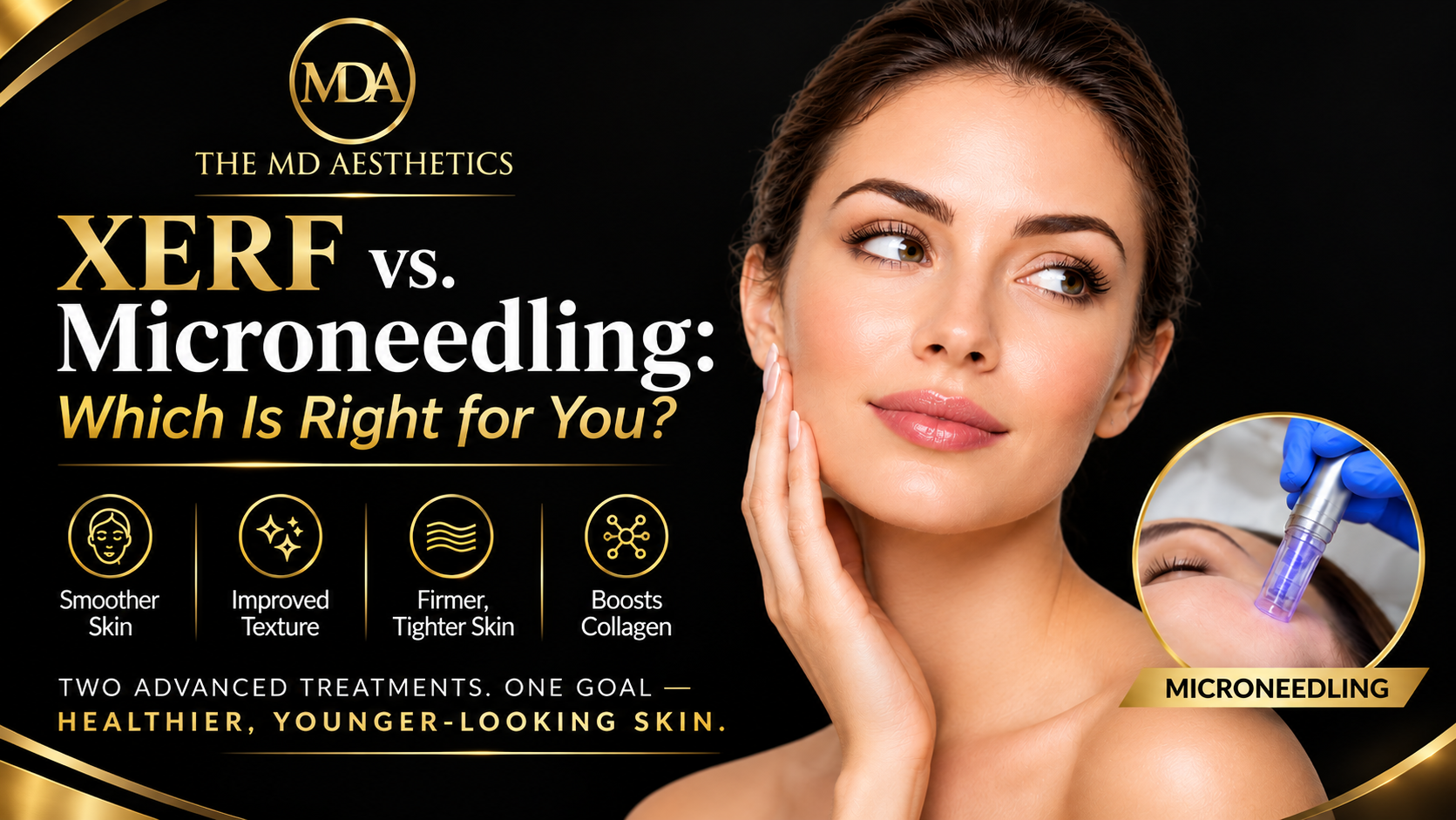
There is a moment a lot of people reach in their late thirties or forties where they catch their reflection in a car window or a bad bathroom mirror and think, “when did that happen?” The jawline feels a little softer. The cheeks sit a bit lower than they used to. Nothing dramatic, just a quiet drift. And almost immediately, the question that follows is: do I really need surgery to fix this, or is there something gentler that actually works?
That question is exactly why XERF has become one of the most talked-about treatments in medical aesthetics right now. It is being called a non-surgical facelift, which is a bold claim, and bold claims deserve a closer look before you believe them. So let’s talk honestly about what XERF actually is, what it can realistically do, and whether the hype holds up.
What XERF Actually Does
Most skin tightening treatments work on the surface. They warm the upper layers of skin, encourage some collagen production, and give you a modest improvement in texture. XERF takes a different approach. It uses two radiofrequency frequencies instead of one, which allows it to treat both the surface skin and the deeper structural layer beneath it, the same layer surgeons address during an actual facelift.
That deeper layer is what really holds your face up. As it loosens with age, everything above it starts to follow, which is why skin can look like it is sliding rather than simply thinning. By reaching that structural layer, XERF is designed to support a more meaningful lift, not just smoother skin on top of the same sagging foundation.
Who Tends to Benefit Most
XERF tends to suit people with mild to moderate laxity, the kind of change that shows up as a softer jawline, a slightly heavier lower face, or a neck that no longer looks quite as defined. It is also a popular option for people who have lost weight and are dealing with new skin laxity as a result, since the treatment focuses on rebuilding firmness rather than adding volume.
It also appeals to people who have tried filler and did not love the result, or whose skin simply does not respond well to it. Because XERF works by encouraging your own collagen to rebuild, there is nothing being added or implanted, which some people find reassuring.
What the Experience Is Actually Like
The treatment itself is far less intimidating than the word “facelift” suggests. There is no cutting, no anesthesia, and typically no numbing needed at all. The handpiece glides over the skin while it delivers warmth that most people describe as comfortable rather than uncomfortable, and you can walk out and go about your day right after.
Results are not instant in the dramatic sense. There is some immediate tightening, but the real change unfolds gradually over the following weeks as your skin quietly rebuilds collagen in the background. It rewards a little patience.
So, Is It Worth the Hype?
Here is the honest answer. XERF is not a replacement for a surgical facelift, and any treatment that promises it can fully match surgery is overselling itself. What it does offer is a genuine middle ground, something more substantial than a typical RF facial, without the recovery time, incisions, or commitment that surgery requires.
For someone who is not ready to consider surgery, or simply does not want it, but is looking for more than a surface-level treatment, XERF fills a real gap. It is not magic, but it is a thoughtful piece of technology built to reach the layer of skin that actually matters for lift and definition.
If you have been noticing that quiet drift in the mirror and wondering what your options are, the best next step is a conversation, not a decision. Every face ages differently, and the right approach depends on your skin, your goals, and how much change you are hoping to see. A consultation can help you understand whether XERF fits what you are looking for, or whether another option might serve you better.
The hype around XERF exists for a reason. Whether it is worth it for you comes down to your own face, your own timeline, and what you are hoping to feel when you catch your reflection next.